
Blog
Dry Scalp or Dandruff? How to Tell the Difference

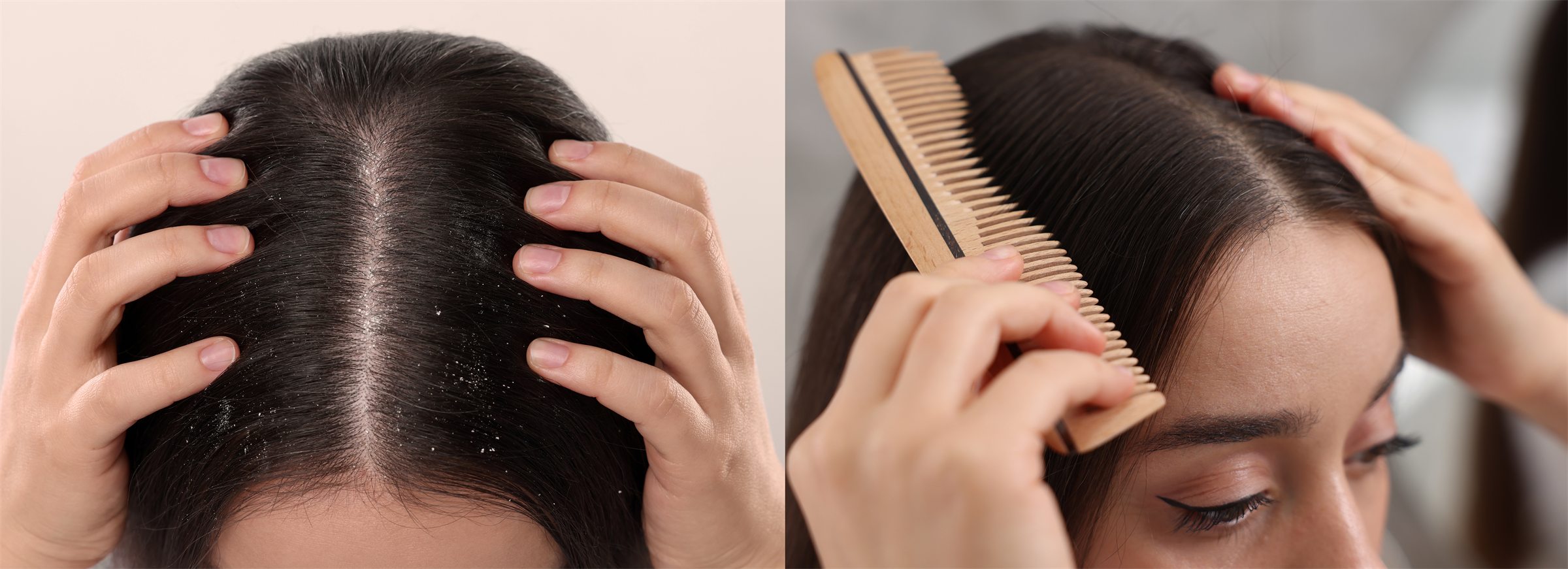
Flaking sends most people to the same shelf, and roughly half of them buy the wrong thing. Dry scalp and dandruff look similar at arm’s length and behave nothing alike up close.
What the flakes tell you
Look at the flake itself rather than the fact that flaking is happening.
- Dry scalp flakes are small, white, and powdery. They fall loose and scatter
- Dandruff flakes are larger, yellowish or gray, and slightly oily. They cling to the hair and the scalp
Skin condition matters too. Dry scalp feels tight, especially after washing. Dandruff often comes with redness and an oily surface, which is the part people find counterintuitive.
The causes run opposite
Dry scalp is a moisture problem. The skin is not producing or holding enough oil, often driven by cold weather, hot water, hard water, or a cleanser that strips too aggressively.
Dandruff is not a moisture problem. It is usually linked to an overgrowth of a yeast that lives on everyone’s skin and feeds on sebum. More oil, not less.
This is why the same rich oil that soothes a dry scalp can make dandruff worse. You are feeding the thing causing it.
A quick check
- Wash with a mild cleanser and let hair dry naturally
- Wait 24 hours
- Look at the scalp under good light, parting the hair in several places
- Note whether the surface looks tight and dull, or shiny and red
- Press a tissue to the crown
Tight, dull, no oil on the tissue points to dry. Shiny, red, oil on the tissue with flaking points to dandruff.
What to do next
For dry scalp, reduce what is stripping it. Lower the water temperature, cut wash frequency, and add moisture at the scalp rather than only on the lengths.
For dandruff, moisture is not the lever. Managing the oil environment is. That means a cleanser suited to it and resisting the urge to layer heavy oils on top.
When it is neither
Persistent flaking with well defined red patches, silvery scale, or flaking that extends past the hairline onto the face may be psoriasis or seborrheic dermatitis. Those need a clinician, not a shelf. If flaking has not improved after six to eight weeks of a suitable routine, get it looked at.